Ounces in a Cup: Quick Cup‑to‑Ounce Conversion Guide
Find out how many ounces are in a cup—liquid vs dry, ingredient-specific conversions, and easy kitchen charts for accurate cooking and baking.
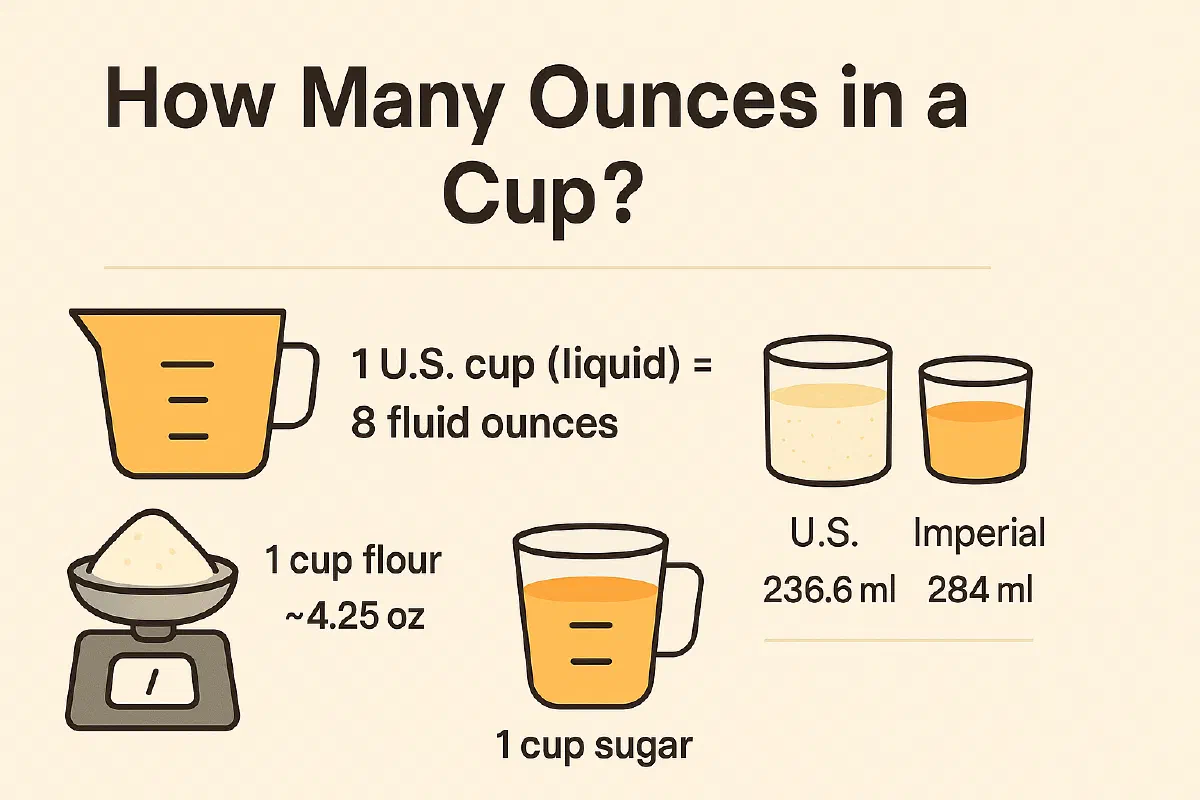
If you’ve ever wondered how many ounces are in a cup, you’re not alone—this deceptively simple question has a few hidden layers. The answer changes depending on whether you’re measuring volume (fluids) or weight (dry ingredients), and even which country’s “cup” standard you’re using.
In this guide, we’ll break it down with clear charts, ingredient-specific conversions, and practical tips to make your cooking and baking accurate every time.
Quick answer
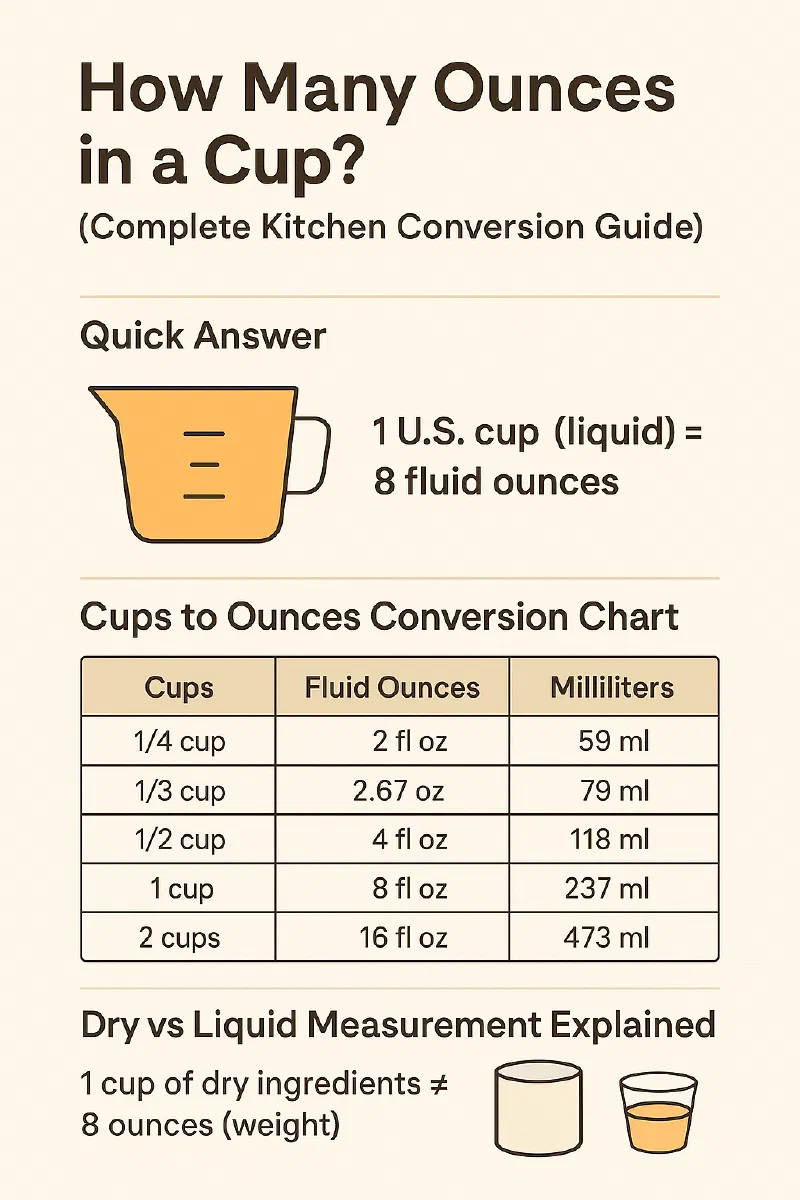
- 1 U.S. cup (liquid) = 8 fluid ounces (fl oz)
- 1/2 U.S. cup (liquid) = 4 fluid ounces
- 1/4 U.S. cup (liquid) = 2 fluid ounces
For dry ingredients, 1 cup doesn’t always equal 8 ounces by weight. It depends on the ingredient’s density—flour is lighter than sugar, for example.
Liquid vs dry — why conversions differ
A fluid ounce measures volume (space a liquid takes up), while a dry ounce measures weight. Since ingredients vary in density, a cup of flour weighs much less than a cup of sugar.
This is why the phrase “1 cup = 8 ounces” is only true for liquids. For dry goods, it’s better to rely on weight conversions or a kitchen scale.
Ingredient-specific ounce conversions
| Ingredient | 1 U.S. Cup | Weight (oz) | Weight (g) |
|---|---|---|---|
| Water / Milk | 1 cup (liquid) | 8 fl oz | 237 ml |
| All-purpose flour | 1 cup | ~4.25 oz | ~120 g |
| Granulated sugar | 1 cup | ~7 oz | ~200 g |
| Brown sugar | 1 cup (packed) | ~7.5 oz | ~213 g |
| Butter (softened) | 1 cup | 8 oz | 227 g |
Pro tip: For baking, weigh ingredients for consistency. A small variation in flour weight can make a big difference in results.
U.S. vs U.K. vs metric cups
Another wrinkle: not all “cups” are equal worldwide.
- U.S. customary cup = 236.6 ml
- U.S. “legal” cup (used on nutrition labels) = 240 ml
- Metric cup (Australia, Canada, NZ) = 250 ml
- U.K. Imperial cup (rarely used today) = 284 ml
That’s nearly a 20% difference between U.S. and U.K. cups—enough to ruin a delicate recipe if you don’t adjust.
Quick kitchen hacks and tips
- No scale? Use ingredient-specific charts (like above).
- Visual cues: a standard coffee mug ≈ 1 cup (but not exact).
- Always check whether a recipe is written in U.S. or metric units.
- Bookmark this guide or use our volume converters for instant answers.
Frequently asked questions
Is 1 cup the same as 8 ounces?
Yes, for liquids. For dry ingredients, it depends on the ingredient.
How many ounces in half a cup?
1/2 U.S. cup = 4 fluid ounces.
Why do dry ounces differ from liquid ounces?
Fluid ounces measure volume; dry ounces measure weight.
How many ounces are in a U.K. cup?
1 U.K. cup = 284 ml ≈ 9.6 U.S. fl oz.
Conclusion
- Liquids: 1 U.S. cup = 8 fl oz
- Dry ingredients: ounce values vary by ingredient
- Cup sizes differ worldwide—U.S., U.K., and metric standards aren’t interchangeable
So, the next time you’re cooking or baking, you’ll know exactly how to measure. And when in doubt, use our unit converters for quick, accurate results.
Further reading
Related conversion tools
Last updated: